

7 Warning Signs of Termites in Dallas Homes (And What to Do Next)
Termites cause more than $5 billion in property damage across the U.S. every year — and most of that damage happens silently, inside walls and under floors, long before a homeowner realizes there’s a problem. In Dallas-Fort Worth, where subterranean termite pressure is among the highest in the country, catching an infestation early can mean the difference between a $1,000 treatment and a $20,000 structural repair.
Here are the seven most reliable warning signs of termites in a Dallas home — and exactly what to do if you spot any of them.
Looking for the full picture? Read our Complete Termite Treatment Guide for everything DFW homeowners need to know.
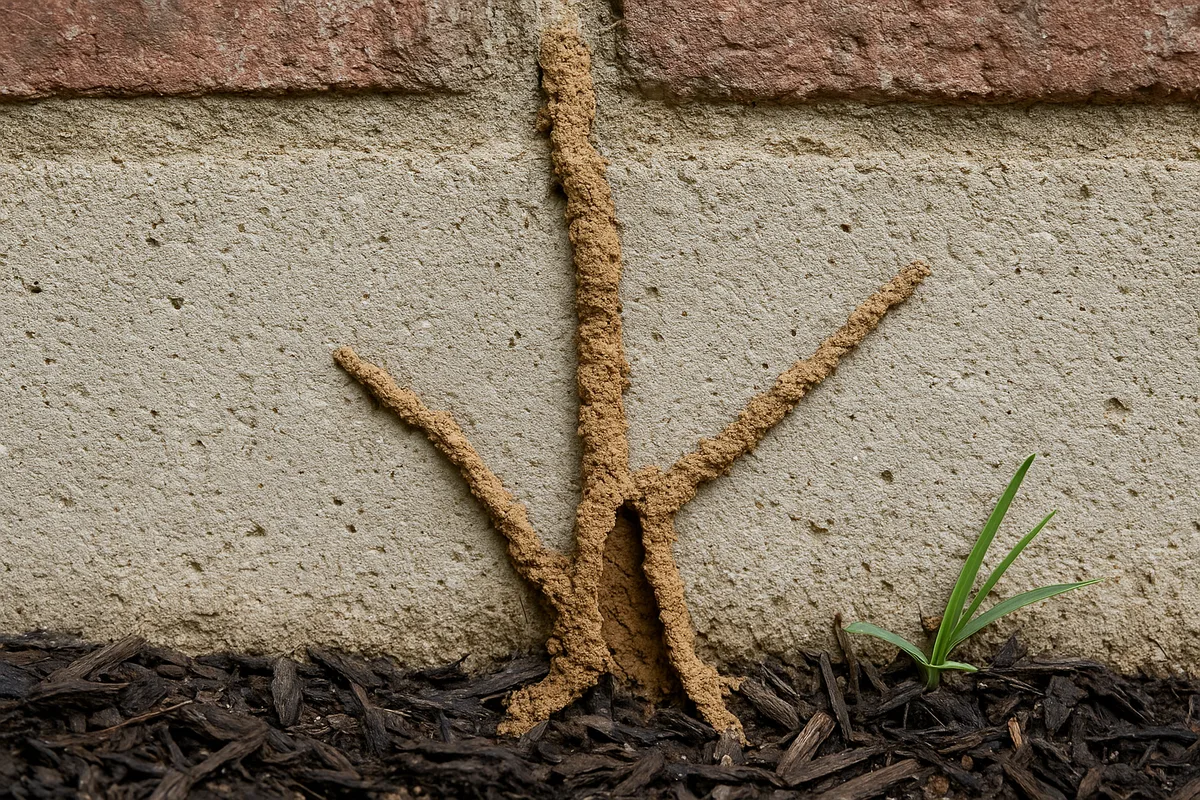
Sign #1: Mud Tubes on Foundation Walls
This is the clearest indicator of an active subterranean termite infestation. Subterranean termites build pencil-width mud tubes — made from soil, saliva, and wood particles — to travel between the soil and their food source (your home’s wood framing).
Where to look: Along your foundation walls (exterior and in the crawl space), along piers and concrete block walls, around where plumbing enters the foundation, and along sill plates.
What to do: Don’t break the tube to see if termites are inside — call a pest professional. An inspector can determine if the tube is active and assess the extent of the infestation.
Sign #2: Swarmer Termites or Discarded Wings
In spring (typically March through May in DFW), mature termite colonies release swarmers — winged reproductive termites whose job is to find a new location and start a new colony. Swarmers look similar to flying ants but can be distinguished by:
- Equal-length wings (ant wings are unequal)
- Straight antennae (ants have bent antennae)
- Thick waist (ants have a pinched waist)
You might see swarmers near windows, light fixtures, or exterior doors. More often, you’ll find piles of shed wings on windowsills or near doorways — swarmers shed their wings immediately after finding a mate.
What to do: Finding swarmers indoors almost always means an established colony exists in or around your home. Schedule an inspection immediately.
Sign #3: Hollow-Sounding Wood
Termites eat wood from the inside out, leaving a thin outer shell while hollowing out the interior. Tapping suspect wood with a screwdriver or your knuckle produces a distinctive hollow or papery sound rather than the solid thunk of intact wood.
Where to check: Window frames, door frames, baseboards, hardwood floors, exposed floor joists (in crawl spaces), and wood trim.
The screwdriver test: Press a screwdriver firmly into any wood you suspect. If it punctures through with little resistance, termites have hollowed out the interior.
Sign #4: Blistering or Bubbling Paint or Flooring
Termite activity produces moisture as a byproduct of their feeding. This moisture causes paint to blister or bubble (similar to water damage) and can cause hardwood floors to buckle or develop an uneven, spongy feel underfoot.
This sign is particularly common in wall areas adjacent to where termites are feeding. Don’t assume paint blistering is just a painting problem in a Texas home — it warrants investigation.
Sign #5: Frass (Termite Droppings)
Drywood termites (less common in DFW than subterranean termites, but present) push their droppings — called frass — out of small holes in the wood they’re infesting. Frass looks like small, oval pellets, roughly the size of a poppy seed, and may be wood-colored or darker.
Finding a small pile of frass near a window frame, door frame, or piece of furniture is a strong indicator of drywood termite activity.
Note: Subterranean termites incorporate their frass into their mud tubes and don’t leave these visible pellet piles.
Sign #6: Tight-Fitting Doors and Stuck Windows
Termite damage and the moisture termites produce cause wood to warp and swell. Doors and windows that suddenly become difficult to open or close — especially on ground floors and in older homes — can be an early sign of termite damage, even if no other signs are visible.
This symptom can also be caused by normal seasonal wood swelling, foundation settling, or humidity changes. But in a Texas home with termite pressure, it’s worth investigating rather than dismissing.
Sign #7: Visible Termite Damage
By the time you can see actual damage — wood that’s honeycombed, fractured, or clearly eaten through — the infestation has typically been active for two to four years. Visible damage is found during renovations, when replacing drywall, or when inspecting crawl spaces and attics.
Even small amounts of visible termite damage warrant a full professional inspection — if you’re seeing damage in one location, there’s almost certainly more elsewhere.
What to Do if You Find Any of These Signs
Do:
- Document what you found with photos
- Note the location and date
- Call a licensed pest control company for a professional inspection
- Clear access to suspected areas (move stored items away from foundation walls, clear crawl space access)
Don’t:
- Break mud tubes or disturb suspected termite activity (it makes inspection harder)
- Apply pesticide yourself — improper treatment can scatter termites and make the infestation harder to eliminate
- Wait and monitor — termite damage is progressive; delay makes it worse
How Fast Do Termites Cause Damage?
A typical subterranean termite colony has 60,000 to 1 million workers. A colony of 60,000 can consume the equivalent of a 2x4 board in about 5 months. Larger colonies — and Formosan termite colonies, which are increasingly present in DFW — can cause structural damage in 1–2 years.
The takeaway: if you find signs of termites, speed matters. A same-season treatment prevents the next season of feeding.
FAQ: Termite Warning Signs
Can I tell if termites are active or if it’s an old infestation?
Active mud tubes contain live termites and are soft. Old tubes are brittle and dry. Active droppings are moist and darker; old frass is dry. A pest professional can determine activity level during an inspection.
Do I need a termite inspection if I’m not seeing signs?
Yes — especially for DFW homeowners. Annual inspections catch activity before signs appear. Most termite infestations are caught during routine inspections, not because homeowners noticed a warning sign first.
My neighbor had termites — am I at risk?
Yes, significantly. Subterranean termite colonies send foragers 150–300 feet in all directions. A colony in your neighbor’s yard is very likely also searching your property. An inspection is strongly warranted.
Are termites covered by homeowner’s insurance?
Generally no. Standard homeowner’s policies exclude termite damage because it’s considered preventable with proper maintenance and inspections.
Think You Have Termites? Don’t Wait.
Top Spot Pest Control offers free termite inspections for Dallas-Fort Worth homeowners. Our licensed inspectors will assess your property and provide a written report of any findings, along with treatment options and pricing.
Schedule Your Free Termite Inspection — we serve Dallas, Plano, Garland, Mesquite, Irving, Richardson, and surrounding DFW communities.